Dubai Desert Safari Guide: Types, What to Expect & How to Choose
Updated June 2026
Around 40 to 60 km south-east of the city centre, the towers stop and the dunes start. Most safari operators head for Al Marmoom or the Dubai Desert Conservation Reserve, 45 to 90 minutes from the main hotel areas. What you do when you get there depends almost entirely on the format you book: a 06:00 morning drive, a mid-afternoon departure that runs into sunset and a camp dinner, or a night in a tent. That choice shapes the whole trip, so this guide starts there.
The three main formats
Morning safari
Morning safaris typically run from roughly 06:00 to 10:00, finishing before the midday heat sets in. They are the quietest option: far fewer vehicles on the dunes, lower temperatures and excellent light for photography. Conservation-reserve morning safaris add the possibility of seeing oryx, gazelle and other wildlife that shelter from the afternoon sun.
Activities vary by operator but usually include a moderate dune drive, a sandboarding session and time at a small Bedouin-style camp for tea and dates. Because it is over by mid-morning, it leaves the rest of the day free. You are back in Dubai with most of the day ahead of you.
Morning safaris suit: early risers, photographers, families with older children, and travellers who find late-night outings difficult.
Evening safari
The evening safari is the classic format and the most popular with first-time visitors. Departures are mid-afternoon, typically around 15:00 or 16:00, timed so the dune bashing runs into the golden hour before sunset. After the drive the convoy pulls up at a large Bedouin camp for a few hours of activities, dinner and performances.
Dune bashing is the set piece: an experienced driver takes a 4×4 across steep dune faces and sharp crests in a sequence that most people find thrilling. The sensation is somewhere between a roller coaster and a boat in rough water. Operators stop if passengers feel unwell, and most allow you to sit out individual runs.
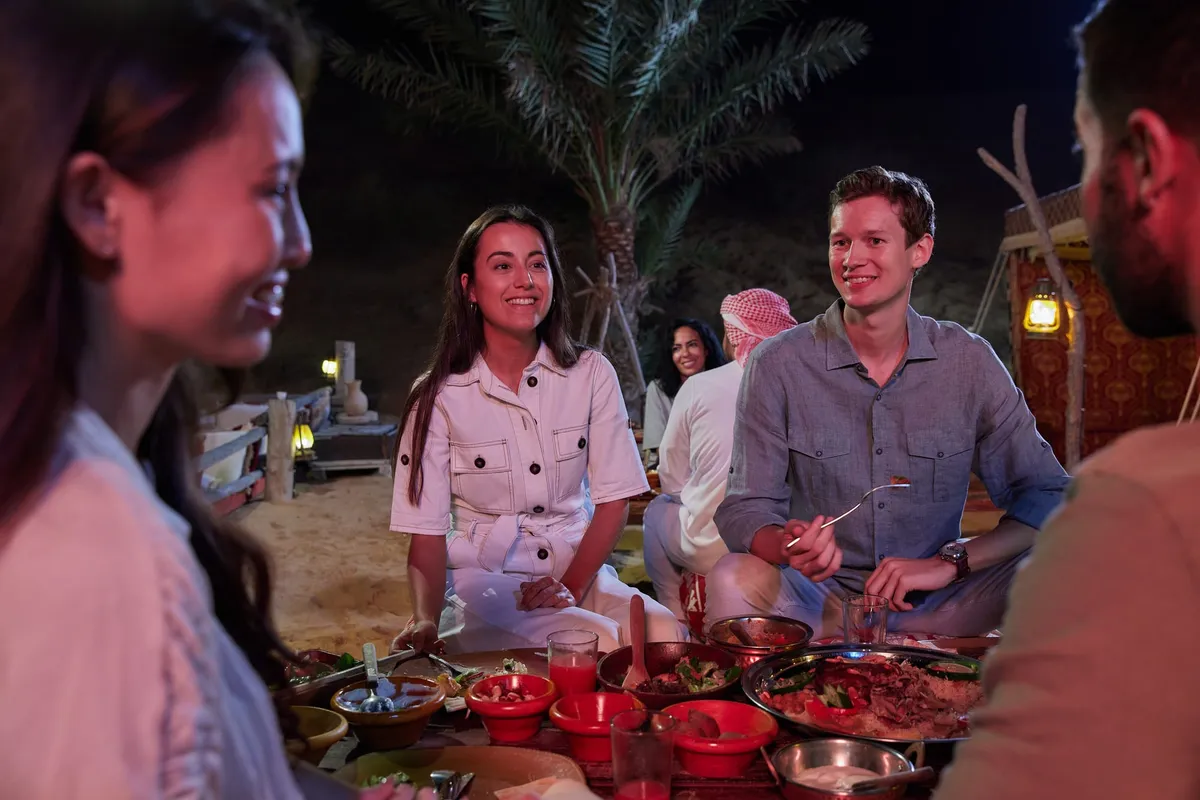
At the camp, activities typically include camel rides, sandboarding, henna painting, falcon photography and Arabic coffee. The cultural-show element in the evening usually features tanoura dancing, a traditional spinning performance rooted in Sufi-influenced folk tradition, alongside other regional performances. Dinner is a buffet. Food quality varies between operators, so read recent reviews before booking.
Evening safaris suit: most first-time visitors, groups, people who want the full cultural-show-plus-sunset package.
Overnight safari
Overnight safaris extend the evening format: instead of returning to the city after dinner, guests sleep in furnished tents at the camp and are driven back after breakfast the next morning. The nights are quiet (no city noise, clear skies) and the morning light on the dunes is worth the extra time.
Some operators offer stargazing sessions and pre-dawn dune walks. Overnight accommodation ranges from basic to surprisingly comfortable glamping setups. Standards vary, so check photos and descriptions carefully.
Overnight safaris suit: travellers who want a full night in the desert, couples, and anyone who finds the evening-safari departure time too tight against their schedule.
Conservation reserve options
Alongside the mainstream safari companies, the Dubai Desert Conservation Reserve (DDCR), a protected area covering around 225 sq km, offers a different kind of trip. Several licensed operators run small-group drives focused on wildlife and the ecosystem. Arabian oryx, Gordon’s wildcat, sand gazelle and over 200 bird species have been recorded here.
These tours are typically smaller, quieter and more educational than the standard dune-bash format. Prices tend to be higher and availability is more limited. If conservation or wildlife photography is your interest, book this instead. The landscape is less disturbed than the commercial dune strips.
Activities in detail
Dune bashing
The core activity of most evening and overnight safaris. The driver deflates the tyres to improve grip on sand and navigates a choreographed route across dunes, often reaching steep angles that produce significant G-forces in the cabin. It is safe with trained, licensed drivers; check that your operator uses experienced guides. Anyone with neck or back issues, pregnancy, or severe motion sickness should skip it.
Sandboarding
A surfboard-style board or a simple sit-on disc, a steep dune face, and a short climb back up. It is gentle by most activity standards and open to most fitness levels. The view from the top of a tall dune is worth the climb on its own. Most camps have a dedicated slope, with basic equipment included in the tour.
Camel rides
Short rides, usually a loop of a few hundred metres at the camp, rather than a long trek. Pleasant, if brief. Worth it for the view from up top and the novelty; be ready for an inelegant mount and dismount.
Cultural shows and camp activities
Standards vary a great deal between operators and budget tiers. The most worthwhile activities at camp are usually the interactive ones: henna painting, trying on traditional dress, and watching the falconer handle a bird. The tanoura spinning performance is one of the more visually distinctive live folk traditions in the region and worth watching if it is included. Arabic coffee (qahwa), dates and other small bites are typically available throughout the camp stay.
What to wear and bring
- Clothing: light and loose for hot-season trips; a light layer for evenings, especially October to March when temperatures cool significantly after dark. Modest dress is respectful and practical.
- Footwear: closed shoes or trainers are better for dune walking and sandboarding. Sandals will fill with sand within minutes.
- Sun protection: sunglasses, a hat or headscarf and sunscreen for daytime components.
- Camera: golden-hour light on the dunes is exceptional. A wide lens and something you can use quickly.
- Water: operators provide water at camp but carrying your own for the vehicle is useful in hot weather.
- Medication: if you are prone to motion sickness, consider a preventive measure before the dune-bashing segment.
Who each format suits
| Format | Best for | Not ideal if |
|---|---|---|
| Morning | Photographers, wildlife interest, early risers | You want the sunset and cultural show |
| Evening | First-time visitors, groups, full experience | You find late return times inconvenient |
| Overnight | A full night in the desert, couples, stargazers | You have an early flight the next morning |
| Conservation reserve | Wildlife enthusiasts, small groups | You want high-energy dune bashing |
Best season for a desert safari
The best time to visit Dubai for outdoor activities is November to March, and that applies doubly to desert safaris. Daytime temperatures in the dunes are pleasant and it gets cool after sunset, so bring a layer for the camp. In summer (June to September) desert temperatures can exceed 45°C, which makes morning safaris very hot and evening safaris warm even at dusk. Operators run year-round, but the cool season is far more comfortable.
Ramadan timing is worth checking: camp dinners and cultural shows during the holy month may be adjusted, and the atmosphere at mixed camps can differ from the rest of the year. The sunsets and landscapes are unaffected.
A note on Bedouin heritage
The desert is the ancestral landscape of the Bedouin peoples, whose traditions of hospitality, navigation and survival shaped the culture of the UAE. The camel, the falcon and the dates served at camp all carry history: falconry was inscribed on UNESCO’s Intangible Cultural Heritage list in 2016, and camel culture runs deep in Emirati and Gulf identity. The camp evening means more when you know a little of that context.
Choosing an operator
Look for: licensed operators approved by Dubai Tourism, clear health and safety guidelines, small group sizes (particularly for conservation tours), and realistic descriptions of the activities included. Group size and vehicle quality tend to shape the experience as much as price does, so read the activity description carefully before booking. Recent visitor accounts across platforms give a reliable sense of what each tour actually includes.
Always verify current schedules, prices and operator health guidelines directly before booking. Activity details and tour formats may change.
Plan your trip
Some links below are affiliate links: if you book through them we may earn a small commission, at no extra cost to you. How this works.
Booking a desert safari ahead through a reputable platform locks in your spot and simplifies the pick-up from your hotel.
Book a desert safari on GetYourGuide Browse desert safari options on Viator Find hotels near the desert on Booking.com Stay connected in the UAE with an Airalo eSIM