Things to Do in Dubai: 20 Best Experiences for First-Time Visitors
Updated June 2026
The 20 experiences below run from 828 metres up the Burj Khalifa to the five-minute abra crossing of Dubai Creek, with a desert dune drive and a dozen cuisines in between. They are grouped by area and type so a first trip can be planned in an order that works on the ground: Downtown and the Burj, the desert and the coast, Old Dubai, the Palm, food and malls, then day trips.
Landmarks and viewpoints
1. Burj Khalifa: At the Top
The Burj Khalifa is the world’s tallest building at 828 metres. The At the Top ticket takes you to the observation decks on the 124th and 125th floors, or up to the 148th-floor Atmosphere level for a premium visit. Book well in advance. Timed tickets for sunset slots go fast, and turning up without a reservation almost always means paying a same-day premium. Afterwards, cross the road for the Dubai Fountain show (free, every half hour from 6 pm).
Some links below are affiliate links: if you book through them we may earn a small commission, at no extra cost to you. How this works.
Book Burj Khalifa tickets on GetYourGuide Compare At the Top options on Viator2. Dubai Fountain
The Dubai Fountain sits on a 30-acre lake at the foot of the Burj Khalifa and is the world’s largest choreographed fountain. The free evening shows run every 30 minutes from 6:00 pm through to around 11:00 pm; the best views are from the lakeside promenade, the bridge connecting Dubai Mall to Souk Al Bahar, or from a table at a waterfront restaurant. For a different perspective, a traditional abra boat ride across the fountain lake (ticketed) puts you right on the water.
3. Museum of the Future
The Museum of the Future opened in 2022 on Sheikh Zayed Road. The building is a torus covered in Arabic calligraphy windows. Inside, the exhibitions walk you through near-future scenarios in space, ecology and technology; there is no collection of artefacts. Allow at least two hours. Timed tickets must be booked ahead.
Browse Museum of the Future tickets on GetYourGuide4. Observation decks beyond the Burj
The Burj Khalifa is the tallest vantage point, not the only one. The Sky Views Observatory at Address Sky View has a glass slide between towers. The View at the Palm shows you the frond layout of Palm Jumeirah from 240 metres. Ain Dubai, the world’s largest observation wheel, on Bluewaters Island, gives the arc from the sea. Our best views in Dubai guide covers all of them with booking tips.
Desert and outdoor experiences
5. Desert safari
A desert safari is, for many visitors, the experience they remember longest. An afternoon departure into the red dunes south of the city typically includes dune driving, a camel ride at sunset, sandboarding, and a Bedouin-style camp dinner with fire, music and stargazing. Half-day, full-day and overnight options exist. Which style to book, what to wear, and how to read the fine print are all in our desert safari guide.
Browse desert safari tours on GetYourGuide Compare desert safari options on Viator6. Dubai beaches and beach clubs
Dubai has more than 40 kilometres of coastline. The beaches range from free public stretches (Kite Beach, Jumeirah Beach, JBR Beach) to serviced beach clubs with infinity pools, sun-bed bookings and all-day menus. Beach clubs are most popular from October to April, when the sea temperature and weather are at their best. The UAE weekend is Saturday and Sunday, so those are the busiest beach days. Our best beach clubs in Dubai guide covers the main options across Marina, Palm Jumeirah and the Jumeirah coast.
7. Dhow cruise
A dhow is a traditional wooden sailing vessel, and a dinner cruise on one is a slow way to see the skyline from the water. There are two main routes. The Dubai Creek route passes the old gold and spice souks lit up at night. The Dubai Marina route glides past 40-storey glass towers and the JBR waterfront. Most cruises include dinner and run in the evening; expect a relaxed two hours. Book in advance, especially at weekends.
Browse dhow cruise experiences on GetYourGuidePrefer a private boat for a group or a celebration? Our sister site YachtGuideUAE explains how chartering a yacht in Dubai works.
Old Dubai and cultural experiences
8. Deira Gold Souk and Spice Souk
Deira’s Gold Souk has one of the highest concentrations of gold jewellery shops in the world. Walk in, compare, and bargain; the souk is as much a spectacle as a market. Across the road, the Spice Souk is compact: saffron, frankincense, dried rose petals and chilli in open sacks. The area is most comfortable in the morning or after 4 pm, once the midday heat has eased. See our Deira and Old Dubai guide for a walking route linking the souks, the Creek, and Al Fahidi.
9. Al Fahidi Historical Neighbourhood and Dubai Museum
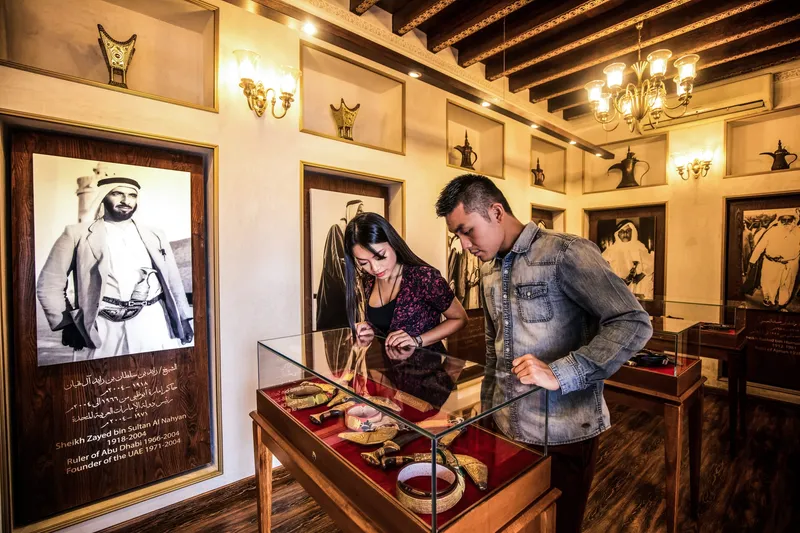
Al Fahidi is the preserved historic core of Dubai: a maze of wind-tower houses, small galleries and courtyard cafés. Dubai Museum, inside Al Fahidi Fort, tells the story of a fishing village that became this city. The neighbourhood is calm, compact and free to walk; the museum charges a modest entry fee. Allow a couple of hours and plan a coffee break in one of the courtyard cafés.
10. Abra ride across Dubai Creek
The Creek separates Deira (east) from Bur Dubai (west), and the traditional way across is a wooden abra ferry for a small fare. The five-minute crossing has run for generations and is one of the few things in Dubai that has barely changed. Catch it from the Deira Old Souk Abra Station.
Palm Jumeirah, waterparks and family experiences
11. Palm Jumeirah and the Atlantis
The Palm is Dubai’s man-made island, shaped as a palm with 17 fronds reaching into the Arabian Gulf. The easiest way to see the layout is from The View at the Palm or Ain Dubai. On the Palm itself, the Atlantis The Palm resort anchors the crescent with the Aquaventure waterpark, The Lost Chambers aquarium, and a stretch of private beach. You can visit Aquaventure and The Lost Chambers as a day visitor without staying at the hotel.
12. Dubai waterparks and aquariums
Beyond Aquaventure, Dubai has Wild Wadi (next to Jumeirah Beach Hotel), Laguna Waterpark on La Mer, and the Dubai Aquarium and Underwater Zoo inside Dubai Mall, which has one of the world’s largest acrylic viewing panels and 33,000 aquatic animals. Our Dubai water parks and aquariums guide covers each in detail, with what to expect and how to book.
Browse waterpark and aquarium tickets on GetYourGuideFood, markets and urban exploration
13. Dubai Mall
Dubai Mall has over 1,200 retail units, an ice rink, an aquarium, a VR park, a dinosaur skeleton and a waterfall. The fountain-side wing has dozens of restaurant terraces with evening views of the Burj Khalifa and the fountain show. Plan for three hours minimum; most visitors end up spending a full half-day.
14. Global Village
Global Village runs seasonally from October to April (exact dates change annually) and brings pavilions from over 90 countries onto one outdoor festival ground. Expect food, crafts, live performance and fireworks. It is noisy and crowded in a way families tend to enjoy. Check the official calendar for the current season’s dates before you plan around it.
15. La Mer and Jumeirah Beach
La Mer is a low-rise beachfront district in Jumeirah: boutique shops, casual dining, a small waterpark (Laguna), and a relaxed stretch of sand. The beach itself is free to use, and the whole place is less produced than the big beach clubs. The Jumeirah coast makes a good base for the area, including the neighbourhoods and mosques in our Jumeirah guide.
Nightlife and dining out
16. Rooftop bars and sky lounges
Dubai has a lot of tall towers and a long outdoor season, so rooftop terraces and sky lounges are part of how the city eats and socialises. Sunset to around 10 pm is the prime window. Some venues need a reservation; others are walk-in. For recommendations grouped by area, see our best rooftop restaurants in Dubai.
17. A meal in Downtown Dubai or DIFC
Downtown Dubai and the Dubai International Financial Centre (DIFC) hold many of the city’s best-known restaurants: Levantine, modern Japanese, high-design European. Most sit in the mid-range to premium tier. Prices change, and weekend reservations are often needed. A table facing the fountain at night is hard to beat as a dinner backdrop.
Day trips and escapes
18. Dubai Frame
The Dubai Frame is a 150-metre-tall picture frame standing between old Dubai (Zabeel) and new Dubai (the Sheikh Zayed Road skyline). The glass-floor bridge between the two towers is unsettling in a good way. It gets fewer visitors than the Burj Khalifa, so the queue is shorter and the ticket cheaper.
Book Dubai Frame tickets on GetYourGuide19. Miracle Garden and Butterfly Garden
The Dubai Miracle Garden (open October to May, season-dependent) has over 150 million flowers arranged into structures, sculptures and archways across 72,000 square metres. Next door, the Dubai Butterfly Garden is an indoor tropical garden with thousands of live butterflies. Both close in summer; confirm the current season’s dates before visiting.
20. Day trip to Abu Dhabi
Abu Dhabi is about 90 minutes from Dubai by road and has a different character: the Sheikh Zayed Grand Mosque, the Louvre Abu Dhabi, and Yas Island’s theme parks. A hired car or a shared shuttle makes the trip straightforward. If you plan more than a day there, consider a separate night.
UAE cultural note
Dubai’s weekend runs Saturday and Sunday, a change made in January 2022. Friday is a working day for most businesses, though many venues adjust hours around the midday prayer. During Ramadan, opening hours shift significantly across the city, and some venues operate only from sunset; always check before you travel.
Plan your trip
Find hotels in Dubai on Booking.com Explore the Go City Dubai Pass for attraction savings Browse all Dubai experiences on GetYourGuide Compare Dubai tours and tickets on ViatorFor deeper reading on specific areas: Deira and Old Dubai, Best beach clubs, Desert safari, Best views in Dubai, and Water parks and aquariums.
Information may change. Always verify opening hours, ticket prices and booking requirements directly with each venue before you travel.