Dubai on a Budget: How to Visit Without Overspending
Updated June 2026
Four decisions set most of what a Dubai trip costs: the month you fly, the area you sleep in, how you cross the city, and where you eat. This page takes them in turn. The top end of Dubai is expensive and nothing here pretends otherwise. But the same city has a free public beach at JBR, a Metro with a daily fare cap, the souks of Deira, and a mid-range food scene that feeds the residents who work here. Spend on the parts you’ll remember and use the cheap defaults for everything else.
Start with what is already free
A good share of the best days in Dubai cost nothing. The free things to do in Dubai guide goes through the full list; these are the ones worth building a day around:
Dubai Fountain: the world’s largest choreographed fountain runs every evening from around 18:00 at the Burj Khalifa lake. The show is free to watch from the public boardwalk. No ticket, no reservation.
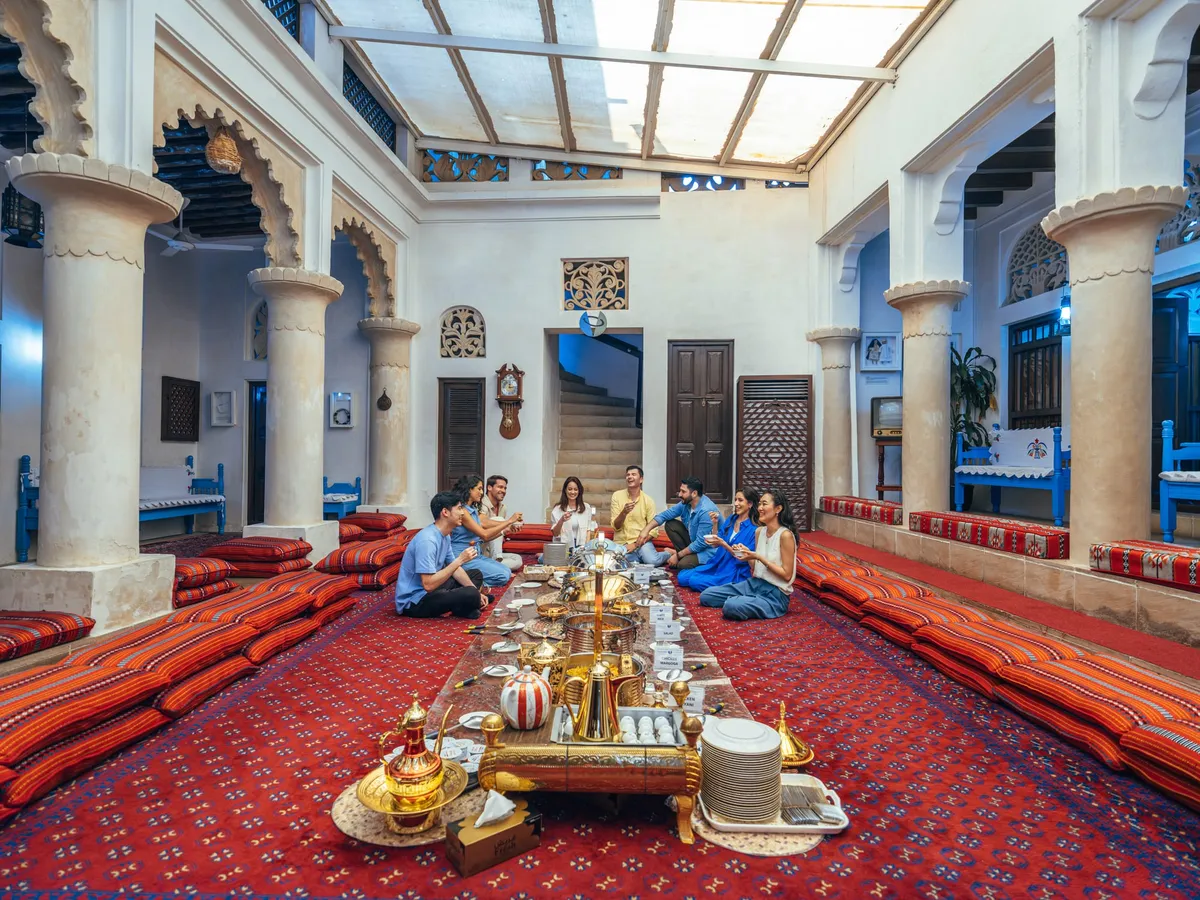
Al Fahidi Historical Neighbourhood: the wind-tower lanes in this heritage quarter are open to walk at no charge. The Sheikh Mohammed Centre for Cultural Understanding (SMCCU) runs free cultural programmes and guided visits on selected mornings. Check their current schedule and book ahead.
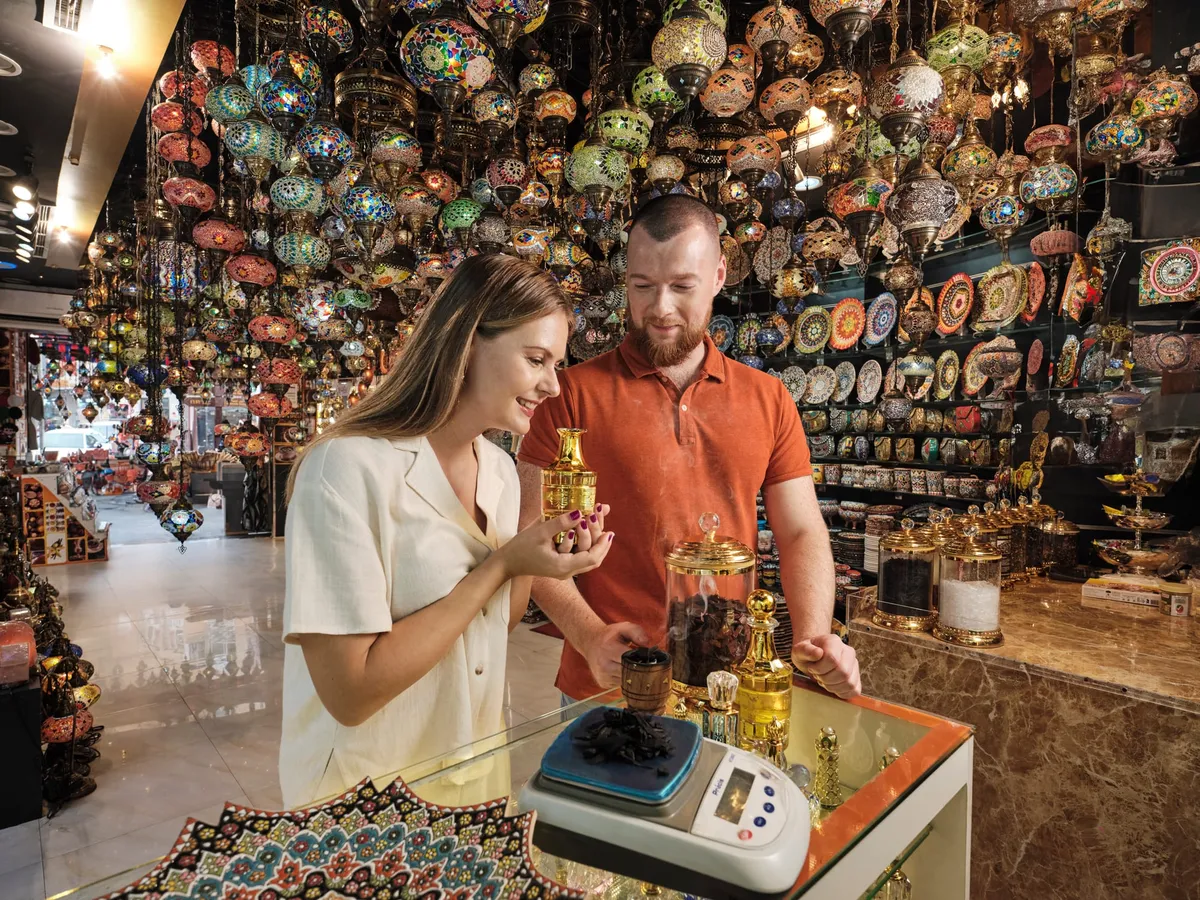
Dubai Creek and abra crossing: the traditional wooden ferry across the creek charges a nominal fare and takes about five minutes each way. Both the Deira and Bur Dubai banks have free-to-enter souks (Gold, Spice, Textile) immediately adjacent.
JBR and the public beach: Jumeirah Beach Residence has a long stretch of free public beach with changing facilities. The coastal walk continues toward Kite Beach, which is also open and free. Beach clubs with pools charge day-pass fees; the public beach does not.
Dubai Marina and Deira waterfront walks: the Marina Promenade (7 km) and the Al Seef creek-side promenade are both walking routes that cost nothing.
Dubai Mall ground floor: the mall is free to enter. The aquarium viewing panel, the indoor waterfall and the Burj Khalifa fountain views are all visible without buying anything.
Cheap eats: where the city actually eats
Dubai’s restaurant economy is two-tier. The waterfront venues are priced for international tourists and corporate expense accounts. The tier that residents use daily costs far less.
Deira and Bur Dubai: this is where the value dining is concentrated. Indian, Pakistani, Filipino and Middle Eastern cafeterias operate with long opening hours and cash-friendly pricing. A substantial meal with bread, rice and protein at a Pakistani dhaba-style restaurant typically runs in the low-AED range. Prices change, so verify locally when you arrive.
Food courts in malls: the food courts at Dubai Mall, Mall of the Emirates and Ibn Battuta Mall have a wide range of cuisines at mid-range prices, with air-conditioning, which matters in the hot months.
Shawarma and manakish: street-style shawarma stands and Lebanese bakeries (manakish: flatbread with za’atar or cheese) are spread all over the city and are some of the best value per dirham you’ll find. Many are concentrated in the Karama and Al Barsha areas.
Karama Market area: the Karama neighbourhood, south of the creek, has a dense concentration of affordable restaurants spanning Indian, Chinese, Sri Lankan and Arabic cuisines. Worth a dedicated lunch or dinner stop if you are in the Bur Dubai area.
One honest note: if you want a meal with a view (water or skyline), budget at least mid-range and often premium pricing. The view commands a margin everywhere.
Public transport: the Metro is your default
The getting around Dubai guide covers the full logistics. The short version for budget travellers:
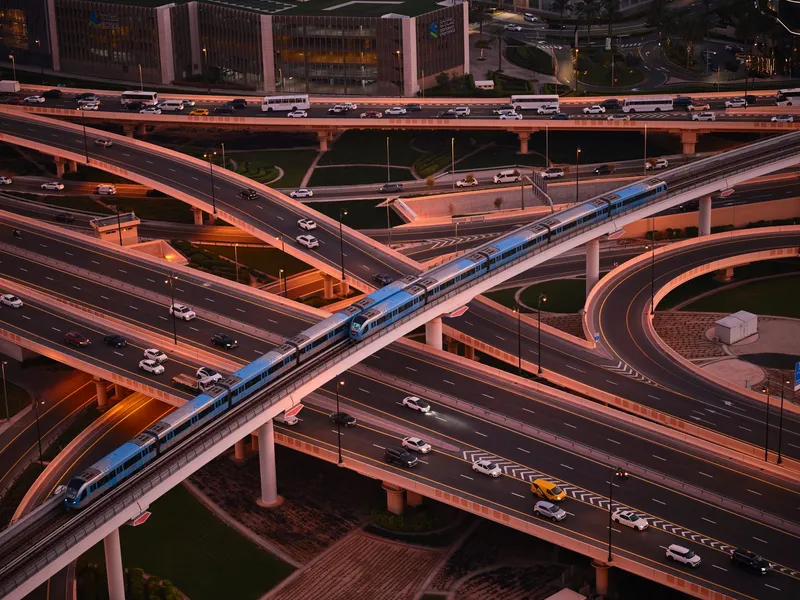
A Silver Nol card costs around AED 25 from any Metro station (including a starting credit balance). Fares are zone-based from roughly AED 3 to AED 7.50 per journey, with a daily cap around AED 14, so a full day on the Metro has a spending ceiling.
The Red Line is the tourist backbone: it connects Dubai International Airport (terminals 1 and 3), Union Square, the Downtown / Burj Khalifa area (DIFC station is closest), the whole Sheikh Zayed Road corridor, and Dubai Marina and JBR. That covers four of the five main visitor districts.
What the Metro does not reach: Palm Jumeirah requires either the Palm Monorail (which connects to the Metro at Damac Properties station) or a taxi. Desert safari operators almost always include pickup and drop from your hotel.
Ride-hailing (Careem, Uber) is good for gaps the Metro doesn’t cover and for late evenings, but trips across the city add up. Use the Metro as your default and ride-hailing for the last mile or off-network destinations.
Skip the premium taxi queue at the airport: a pre-booked shared or standard transfer from DXB is often cheaper, especially if your flight lands at peak hours.
Choose the right timing
When you travel matters as much as anything for keeping costs down.
Shoulder season (May to June, September): these months sit between peak winter season and the full summer heat. Hotel rates drop noticeably: occupancy falls and hotels discount to fill rooms. Temperatures in May and September are warm but manageable with early mornings and evenings; June is hotter. If heat is manageable for you, May and early June are among the best months for hotel value.
Summer (July and August): the hottest months, but also the deepest hotel discounts. Outdoor activities become limited to early morning, and desert safaris may not run in peak heat. Indoor attractions (malls, aquariums, water parks) remain popular. If you plan an indoor-focused trip, summer can offer significant savings.
December to February is peak season: the winter months offer the most comfortable weather but also the highest prices. New Year’s Eve commands a particular premium across hotels and restaurants. If budget matters, this window requires earlier booking and less flexibility on price.
Ramadan considerations: during Ramadan, some daytime dining venues are restricted; many restaurants close during daylight and only reopen for iftar (the fast-break meal at sunset). Budget hotels sometimes offer Ramadan discounts. Evenings during Ramadan are busy and sociable. See the best-time-to-visit-dubai guide for how to plan a Ramadan trip.
For a full month-by-month breakdown, the best time to visit Dubai guide covers weather, events and pricing in more detail.
Where to stay without overpaying
The where to stay in Dubai guide covers this fully. The short version for budget-conscious visitors:
Deira and Bur Dubai: the most affordable hotel concentration in the city, close to the historic souks and the Metro Green Line. Mid-range and budget hotels are plentiful. The trade-off is distance from the beach: a 30 to 40 minute Metro journey to JBR.
Al Barsha: sits on the Metro Red Line close to Mall of the Emirates, with good mid-range inventory and easier access to the Marina than Deira. Popular with business travellers and families.
Dubai Marina and JBR: prices are higher than Deira, but the area is very walkable and the public beach is at your doorstep. Occasional deals appear in apartment hotels, which tend to offer better per-night value than traditional hotel rooms in this area.
Downtown Dubai: central location with Metro access in all directions, but room rates are higher. Reserve Downtown for when deals appear or when the priority is being steps from the Burj Khalifa.
A general rule: accommodation further from the coast is cheaper. Dubai’s geography means coastal proximity carries a consistent price premium.
Five habits that keep costs down
The single most effective budget move is to eat where residents eat. The Deira and Karama food lanes cost a fraction of waterfront restaurant prices, and the cooking is often more interesting.
- Buy the Nol card on day one and use the Metro as your default. Nothing else cuts your transport spend as much.
- Book accommodation in Deira, Bur Dubai or Al Barsha rather than Downtown or JBR; the savings are substantial for equivalent quality.
- Travel in shoulder season (May, September) when hotel rates drop and crowds thin.
- Use the free beach and free attractions as the backbone of your days rather than ticketed experiences. See the free things to do in Dubai guide for the full list.
- Pre-book attractions and airport transfers. Walk-up prices and last-minute taxis are reliably more expensive than advance bookings, especially at the Burj Khalifa observation deck.
One UAE cultural note: the weekend falls on Saturday and Sunday (since January 2022). Friday midday is still busy with prayers and weekend preparation; accommodation rates often peak Saturday night. Scheduling your check-in for a Sunday or Monday sometimes returns noticeably better pricing.
Information may change. Hotel rates, transport fares and attraction prices are adjusted periodically. Verify current pricing with venues and booking platforms before you travel.
Plan your trip
Some links below are affiliate links: if you book through them we may earn a small commission, at no extra cost to you. How this works.
Compare budget hotels in Deira on Booking.com Get a UAE eSIM on Airalo and skip the airport SIM queue