What to Pack for Dubai: A Season-by-Season List
Updated June 2026
Dubai asks you to pack for two climates at once. Summer afternoons rarely drop below 35°C, and the malls and restaurants are air-conditioned hard enough to make you reach for a sleeve. Winter evenings in January and February can fall to 14 to 17°C. On top of that, one day can take you from the beach to a mall to a mosque to a rooftop restaurant, and each has its own expectations.
Below: clothing by season, sun protection, footwear, tech, the modest-dress basics, and what to add if your trip falls in Ramadan.
Understanding Dubai’s seasons before you pack
The single most important input to your packing list is when you are travelling. Read the full best time to visit Dubai guide for the big picture; here is the packing-relevant summary:
- Summer (June to September): Hot and humid. Afternoons regularly reach 38 to 42°C, with high humidity near the coast, and being outdoors between 10:00 AM and 5:00 PM is uncomfortable. Pack for air conditioning indoors (you will be cold in malls and restaurants) and for short bursts of heat outside.
- Shoulder (October, April and May): Warm and manageable. Light layers for evenings.
- Winter (November to March): Peak tourist season. Daytimes sit around 24 to 28°C. Evenings in January and February can drop to 14 to 17°C, so a light jacket or knit is not excessive.
Clothing: the layering paradox
You need a warm layer for inside (the air conditioning is fierce) and light, breathable fabric for outside. Pack pieces that do both.
Lightweight breathable fabrics (linen, chambray, moisture-wicking cotton blends) work year-round. Heavy synthetics trap heat and sweat in summer; leave them at home.
In summer, pack as little as you can manage outside. Loose, light trousers or shorts, sleeveless or short-sleeve tops, and sandals work well for tourist zones, malls, and the beach. You will be grateful for a compact packable sweater or long-sleeved layer every time you step indoors.
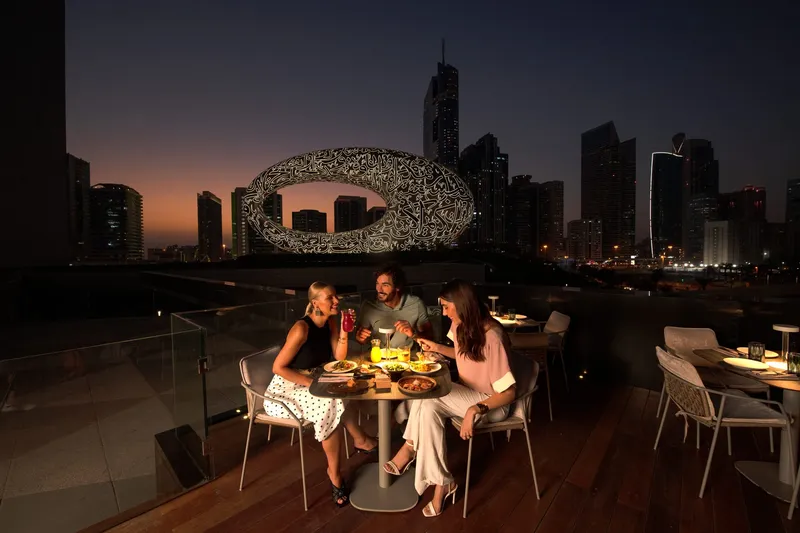
In winter, a light jacket, a knit or fleece, and one set of warmer layers for evenings earn their space. Evenings on the Dubai Marina waterfront or on a rooftop terrace can be breezy and cool in January and February.
Modest dress: what it means practically
In beach and tourist zones the rules for visitors are relaxed. Elsewhere, modest dress is a legal requirement in some spaces and a mark of respect in others. It is simpler to manage than most visitors expect.
In mosques: Shoulders and knees must be covered for both men and women. Women are required to cover their hair. Many mosques provide abayas and scarves at the entrance. Bringing your own lightweight scarf means you are never caught short.
In souks, markets, and heritage areas: Covering shoulders and knees is expected. You do not need to wear traditional dress, but shorts and strappy tops are out of place and may attract attention in the older parts of the city like Deira and Al Fahidi.
In malls, hotels, and restaurants: The standard is closer to international norms. Casual Western clothing is normal. Beach attire stays at the beach. A sarong or light cover-up is all it takes when you move from the sand to the shops.
Cultural note: Modest dress in public spaces is part of how the UAE works, and it reflects local values and hospitality norms. One or two modest pieces (a linen shirt that buttons to the collar, a midi skirt or light trousers) cover every kind of venue on a typical day. Read our Dubai dress codes explained guide for venue-specific detail.
Beach and pool kit
Beach days deserve their own kit. This applies at a beach club and on a public beach alike:
- Swimwear: Bikinis and swimwear are completely normal at beaches and hotel pools. Topless bathing is not permitted anywhere in the UAE.
- Rash guard or SPF shirt: The UV index is extreme for most of the year, and even in winter it regularly hits 7 or 8 / 10. A long-sleeve rash guard protects you without constant reapplication, which matters if you are in and out of the water.
- Beach cover-up or sarong: Practical for the walk between beach and any indoor or public space.
- Waterproof sandals: Useful for pools, beach clubs, and the waterfront generally.
- Dry bag: If you are heading on a boat trip, dhow cruise, or water taxi, a small dry bag protects phones and documents.
Sun protection: pack more than you think
The Dubai sun is not the European summer sun. The UV index regularly hits 11 in summer and rarely drops below 7 in the cooler winter months. You can burn badly on a day that feels comfortable. Reef-safe sunscreen is the sensible choice given how much time visitors spend in and around the sea.
Pack at least SPF 50 broad-spectrum sunscreen. You can buy it in Dubai, but premium brands are expensive at resort outlets, so bring enough for the trip. A wide-brim hat and UV-blocking sunglasses are worth the luggage space.
Footwear
Comfortable walking shoes are essential. Dubai’s malls and attractions involve more walking than most visitors expect, particularly the Dubai Mall (one of the largest in the world by total area) and the souk routes in Deira.
Sandals work well at the beach, by the pool, and for casual outdoor dining. For rooftop venues and smarter restaurants, a clean pair of flat shoes or low heels gives you flexibility. Extreme heels are uncomfortable on outdoor cobbled surfaces in Old Dubai.
Tech and connectivity
Power adapter: The UAE uses Type G three-pin plugs (the same as the UK). US and most European plugs need an adapter. Pack one; hotel spares are not always available. Voltage is 220 to 240V.
eSIM or local data SIM: Strong connectivity matters for navigation, ride-hailing, and translation. An eSIM from a provider like Airalo can be activated before you leave home and avoids airport SIM queues. Coverage is good: 4G and 5G are widespread across the city, including in the metro and most malls. See our Dubai eSIM and connectivity guide for the full breakdown.
Portable charger: Long days moving between attractions, outdoor heat (which drains batteries faster), and heavy navigation use mean a decent-capacity power bank earns its weight.
Note on VoIP: Some VoIP and video-calling services operate with restrictions in the UAE. Check the current status of any app you rely on before travelling, as restrictions change.
Ramadan packing considerations
If your trip overlaps with Ramadan (the Islamic holy month, whose dates shift by around 11 days each year), add a few items to the list. Read the full Ramadan in Dubai visitor guide for the broader context.
Modest dress becomes especially important during Ramadan, even in tourist areas. A lightweight scarf or shawl for women is the most useful addition. Eating, drinking, and smoking in public during daylight hours is not permitted, though hotels and designated areas remain open for non-Muslims. Evenings during Ramadan are often lively, with extended opening hours for restaurants and cultural events after sunset.
Pack a refillable water bottle with a secure lid. It lets you stay hydrated discreetly as you move between spaces. A compact bag with a zip rather than an open tote makes it simpler to be mindful in public spaces.
What you can confidently leave out
- Formal wear for every occasion: Dubai is more fashion-forward than formal. Smart casual covers most high-end restaurants and venues. Full black-tie is rarely required unless you have a specific event.
- Umbrella: Rain is infrequent and brief. It is not worth the luggage space unless you are visiting in winter and want peace of mind.
- Heavy winter coat: Even in January, a mid-weight jacket or layered knit is more than enough unless you plan to visit during an unusual cold snap.
- Multiple guidebooks: The city’s layout and attractions are well-served by navigation apps, and the time you would spend with a physical book is better spent in the city itself.
A summary packing checklist by season
Year-round essentials: breathable clothes in layers, sun protection (SPF 50+), hat, UV sunglasses, Type G plug adapter, eSIM or SIM plan, comfortable walking shoes, modest-dress piece (linen shirt or light trousers/skirt), swimwear and cover-up, power bank.
Summer additions: rash guard, extra sun protection, maximum light fabrics, a packable insulating layer specifically for indoor air conditioning.
Winter additions: light jacket or fleece, one set of warmer evening layers, warmer shoes for evening outings.
Ramadan additions: lightweight scarf or shawl, refillable water bottle with a secure lid.
Plan your trip
Some links below are affiliate links: if you book through them we may earn a small commission, at no extra cost to you. How this works.
Get an Airalo eSIM for Dubai Find your Dubai hotel